


 By neha - July 10, 2026
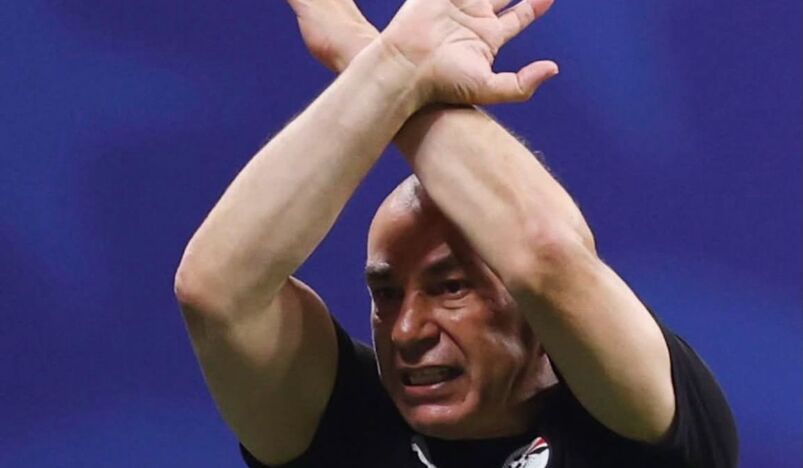
The moment everyone kept replaying from Egypt's exit at this World Cup wasn't a goal. It was a gesture.
In the chaos of Egypt's Round of 16 collapse against Argentina, head coach Hossam Hassan crossed both forearms into an "X" right in front of the fourth official. Under FIFA's own rules, that signal exists for one purpose: reporting alleged racist abuse.
Nobody disputes what the gesture means. What they can't agree on is why Hassan used it.
A Match That Was Already Boiling
Egypt had raced to a stunning 2-0 lead over the defending champions. Then the last 15 minutes fell apart.
Cristian Romero, Lionel Messi, and Enzo Fernandez each scored in quick succession, completing a 3-2 comeback for Argentina. Egypt's bench had already been furious minutes earlier, first over a disallowed goal from Mostafa Zico, then over a penalty appeal involving Mohamed Salah that went unreviewed.
Hassan had already picked up a yellow card for confronting match officials. Moments after Fernandez's stoppage-time winner, he crossed his arms into the "X" directly in front of the fourth official.
What This Gesture Is Actually For
This wasn't an improvised protest. FIFA introduced the crossed-arms signal in May 2024, and all 211 member associations approved it unanimously at the organization's 74th Congress in Bangkok. It's part of FIFA's Global Stand Against Racism initiative.
Under the protocol, any player, coach, or match official can make the gesture to alert referees to alleged racist abuse during a game.
Once a referee acknowledges it, a three-step response is supposed to follow. Play stops temporarily, and the stadium announcer addresses the crowd. If the abuse continues, officials can suspend the match. In the worst cases, they can abandon the fixture entirely.
FIFA first tested the gesture at the 2024 Under-20 Women's World Cup in Colombia, before rolling it out worldwide.
None Of That Happened In Atlanta
The referee never stopped the match. There was no stadium announcement. Nothing suggested officials treated Hassan's gesture as a racism report.
Instead, it seems the referee read it as more dissent from an already-frustrated coach. Play resumed normally, and no discipline was tied specifically to the gesture itself.
Neither Hassan nor the Egyptian Football Association has explained the decision publicly. FIFA hasn't commented either. Multiple outlets covering the match found no evidence that anyone reported or investigated a racist incident connected to the game.
The Bigger Picture
By most accounts, this marks the first time anyone has used the gesture in World Cup history. Its debut ended not with action against alleged discrimination, but with scrutiny falling on the coach who made it.
The incident has since blurred together with Hassan's broader complaints after the match. He accused referee François Letexier of favoring Argentina and said Egypt suffered what he called an unjust defeat.
Whether Hassan meant to file a genuine racism report, vent broader frustration at the officiating, or something caught between the two remains unclear. That ambiguity has become the real story here, raising fresh questions about whether FIFA's three-year-old protocol is understood by the very people it was built to empower.

_20-08-2026_05-08.jpg)
_27-51-2026_11-51.png)
_27-43-2026_12-43.png)



.jpg)
.jpg)




.jpg)


.jpg)
.png)
.jpg)













Leave a comment